Okay, for those who are in the know, you will already be aware that this is not an article about Old School Magic. It, actually, really isn’t. It is about my vintage cube, what I have observed playing it sometimes now, and what conclusions I think could be made from it. Mostly it is about the “Initiative” mechanic.
Now, if you are not familiar with this mechanic, I don’t blame you. It is a mechanic only playable in a rather narrow part of the vast universe of Magic formats. But it is legal in both Vintage Cube and Canadian Highlander. My two primary formats apart from Old School.
Okay, so the Initiative is a mechanic way more powerful than you think, if you have never played with or against it. Most of the cards introdcucing the iniative are rather underpowered in and of themselves. And at first glance the Initiative-dungeon does not necessarily look very powerful or interesting. But believe me; it is. Even more than the slightly more known Monarch mechanic, the Initiative really warps games around it. Drawing a card at the end of each of your turns, where you are the Monarch is strong. But going through the Undercity is both a pseudo-ramp spell, a card-advantage engine, a pseudo removal spell, a tutor of sorts, a kill-condition and even a cheat-fatty-into-play spell all in itself. You just have to introduce the Initiative and then keep it. Then – if all else is equal – you will win.
Okay. Maybe I am getting a bit too fast into things here. Let me rewind just a little, and begin with how the Initiative works.
The Initiative
We all want to show initiative. It is a positive word. Showing initiative is being proactive and on the forefront of things. Nice.
In Magic, the Mechanic was introduced in one of the very small Universe Beyond sets. Specifically the Commander Legends: Battle for Baldur’s Gate in 2022. I have never really played the Baldur’s Gate videogames, so I can’t explain the lore behind it, or how it fits into that universe, but it fits like a foot in a glove in Magic. At least to a point where Initiative cards have been banned in several formats – and taking over games and tournaments in other.
But again, what does it actually do? Okay, it is a game-mechanic that will not do anything before it is introduced. It is solely introduced by cards that say “You take the initiative.” When that happens, you venture into the undercity.
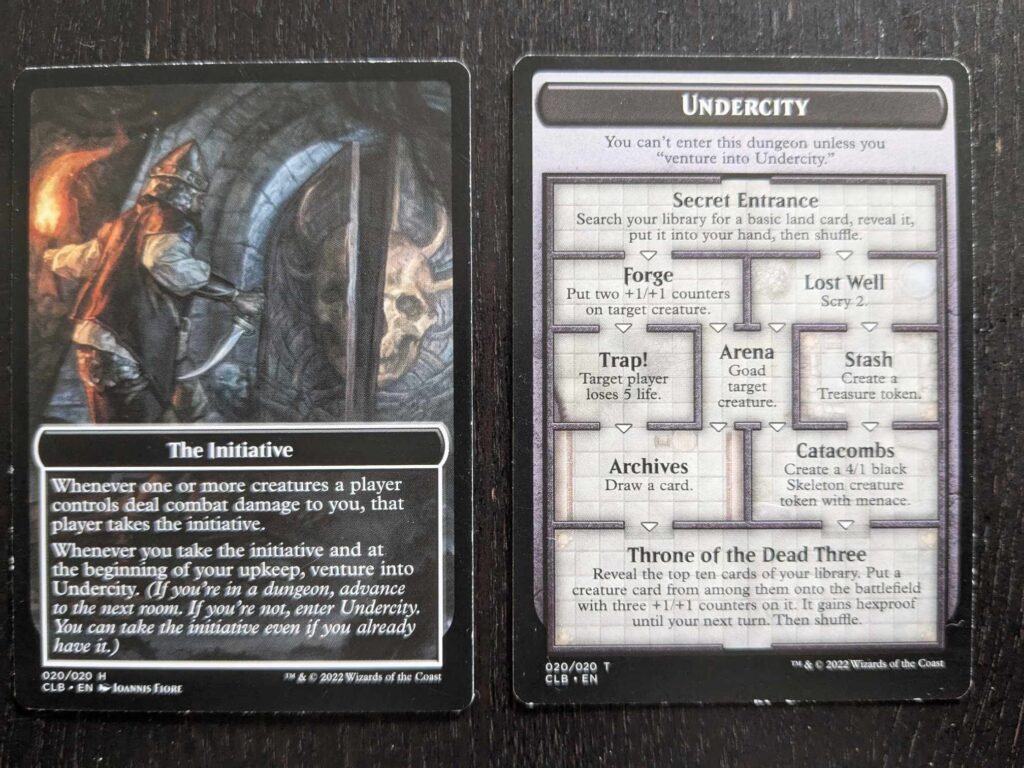
The Undercity is a dungeon – it is a card that cannot be played, but is simply an extra dimension to the game. It cannot be interacted with; destroyed, reduced, changed owner or the likes. It is just there. You can gain the initiative by dealing combat damage to the player currently holding it.
Just like with the Monarch.
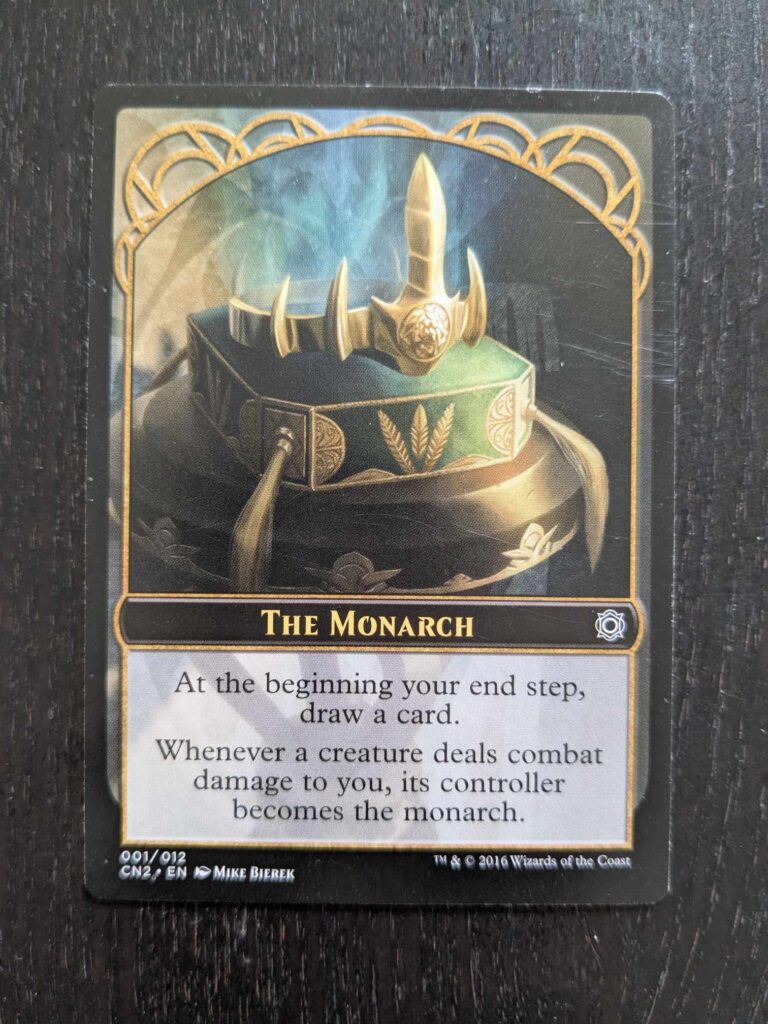
And also, just like the Monarch, as long as you have the Initiative it provides an effect. This one provides the effect, you choose from among the available modes in every upkeep where you hold the Initiative. Unlike the Monarch, this also provides an effect if you get the Initiative while you already have it. Then you just venture one level deeper into the Undercity. This makes it a lot stronger than the Monarch, because if you are able to cast more creatures with this effect, or if you can flicker one, you will quickly get through all the rooms or modes and, well… win.
And that is one reason why this is a powerful mechanic. But the main reason, really, is the different modes you go through, as you venture through the undercity. Even though some of the rooms or whatever may be a bit boring/bad, most of them are really strong, and as mentioned before, they cover a wide range of desirable effects in the game.
So to sum up: the Initiative is a really strong mechanic. Once introduced the game often warps around trying to steal and or keep the Initiative. Most other things are pushed into the background, because if you don’t have a realistic plan for killing the player with the Initiative before they get to the final room of the Dungeon, you have probably lost anyway. So every other plan is basically on stand-by until you acquire the Initiative – and it is not enough to kill the creature that introduced the Initiative. Sadly…
Then what?
So the big question is, whether this makes for a good time. As mentioned earlier the Initiative-introducing cards are not really that great if you subtract the Initiative part. And they start with three mana – and that is only one card, most are 4+ mana. So how can these cards be a problem in insanely powered formats like Vintage Cube and Canadian Highlander.
Well, they can for the exact reason, I mentioned above. Once the Initiative is introduced in a game, the game suddenly is all about the fight for that. That may not be exactly what you would enjoy in a game of Magic. It can certainly become a game about minor advantages in combat math and about finding and playing your creature removal in the right time.
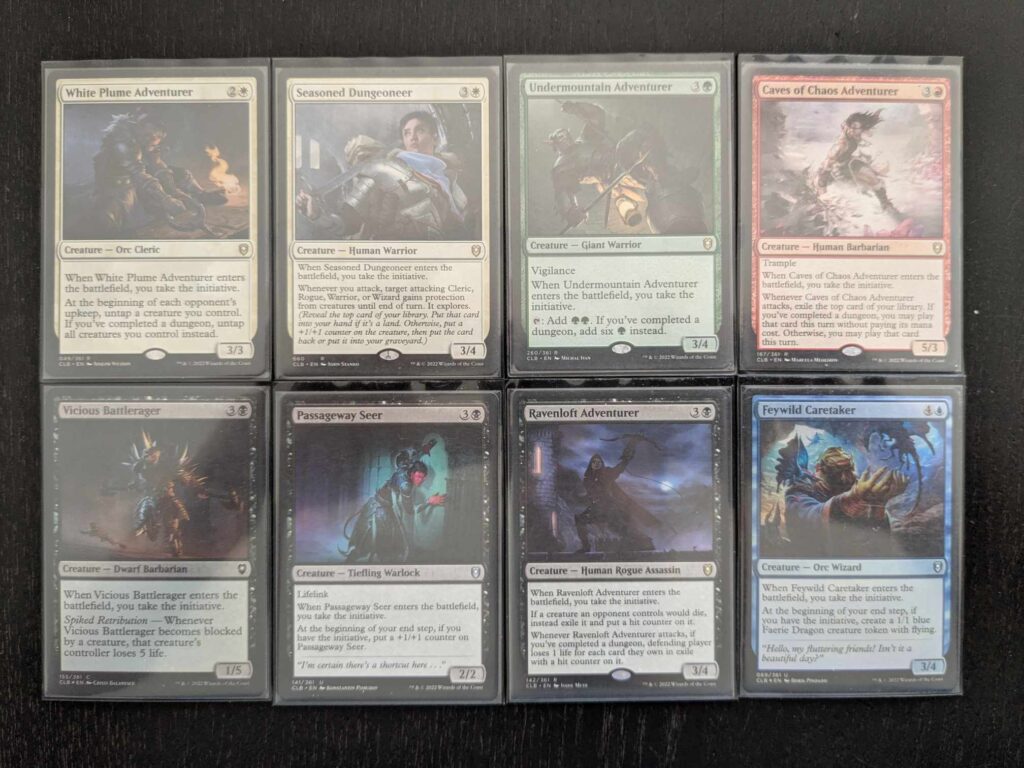
I have included some of the best Initiative cards in my cube (best is rather subjective, and there are a couple of others, that can be equally great), and every time I have now drafted it, at least one person in the pod is surprised about the stupid powerlevel of these creatures at some point throughout the evening. Often – if you are not familiar with the cards and don’t feel you have the time to read all cards carefully – you will not pick these cards.
Just look at this
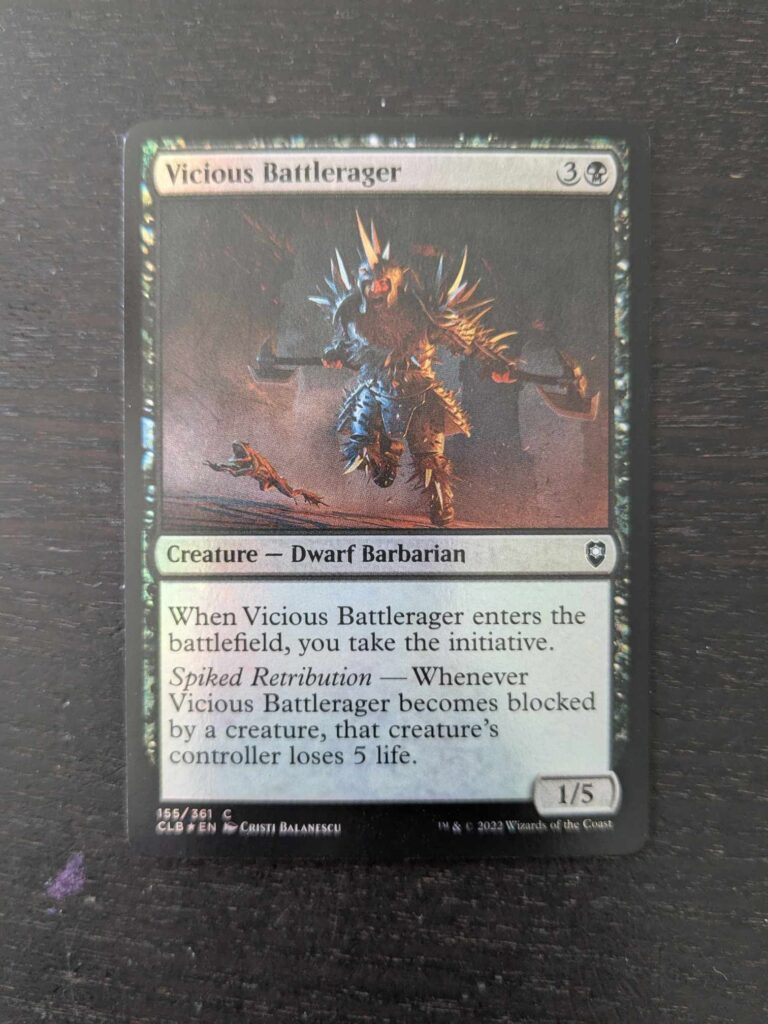
How does one evaluate a card like this in a draft where you can also open Sol Ring, Swords to Plowshares, Flash, Ancestral Recall, The One Ring, Ragawan, Force of Will, Lightning Bolt and all the other very, very powerful cards that are in the Vintage Cube.
Of course, at first glance this card does not look like anything in particular (and it is far from the best Initiative card). But when you resolve this, you will often find a basic land, and then go on to have a 3/7 creature that is basically unblockable – and remember unblockable is really strong, once the Initiative is introduced, because then you can take it back if you lose it.
And then you get further down the Undercity and get more value. This is for the cost of four mana. Even if you don’t start attacking with it right away, it is a powerful blocker that is fully able to help you keep the Initiative.
Is it better than Sol Ring? Of course not. It is not even close to the top picks in the cube. But every card with the words “You take the Initiative” printed on them, deserves a thought in Vintage Cube. At this point I am quite surprised, and often willing to snap-pick, if I see an initiative card at the 4+ pick in a draft. They are that powerful. And if you don’t pick them, I would urge you to have a plan about how to deal with them.
Which really is an important point. Even if you never see any Initiative creatures when drafting, you should probably still try to have a plan against them, if you know they are in the cube. Which means that even before the game starts, this mechanic is warping how we play.
Initiative can make it a lot more difficult to play creatureless(-ish) control. If you can counter every Initiative-creature, fine. But if your plan is to kill them after they hit the table, you are probably in trouble. Especially if you don’t play a lot of creatures yourself. I think this is one of the design thoughts behind this mechanic. I mean don’t get me wrong, I think the mechanic is a pretty big design mistake all in all, but if we have to look at some positive sides to it, it could be that it forces us to play to the table.
I have come to compare the Initiative cards a bit like some of the combo cards in the cube, in that they force you to concentrate your energy towards them. If you see a Lion’s Eye Diamond, a Yawgmoth’s Will, an Underworld Breach or, worst, a Brain Freeze in the drafting, you have to at least think about how you will be able to handle these kind of cards, and the strategies cards like this foster, if you happen to be paired against the drafters that picked these up.
And so, I would argue also with the Initiative cards. The only thing about these cards, in comparison to combo pieces, is that these are basically one-cards combos, and the “only” setup you have to do is play your lands. The only design-choices you have to make in the drafting is to make sure you have enough creatures to protect your Initiative or steal it back, if it lost. Oh, and you should play at least a couple of basics, but that is rarely a problem in draft…
It is really important to remember that introducing the Initiative isn’t free. It comes with a risk. The other day, for example, my opponent played the above-pictured Vicious Battlerager on an otherwise empty board. He introduced the Initiative and found a basic land. I promptly played Swords to Plowshares to make sure that the Battlerager wouldn’t become a threat.
Then I played my own creature in my turn. From then on, the game was all about the Initiative, and I somehow managed to remove his next threat and attack in to gain the Initiative, and then kept developing a board that was just a wee bit stronger – or broader than his. Eventually I stumbled into the last room, and resolved whatever crazy creature among the top10 cards of my library, and I won.
When I play Vintage Cube I acknowledge that I am there to play the biggest baddies of the history of the game. This is actually exactly what I am there for. And that is why I really like having Initiative creatures in my cube – yes, they have a tendency to warp the games in which they are played, but so does Sneak Attack and even Sol Ring to some extent. I agree that the cards can be oppressive and they have a tendency to really throw dirt in the wheels of a lot of other strategies in the game, but I am okay with that. It is simply a matter of playing to the complexity that is the game these days. And in that game, I don’t think it makes sense to exclude some of the very strong creatures.
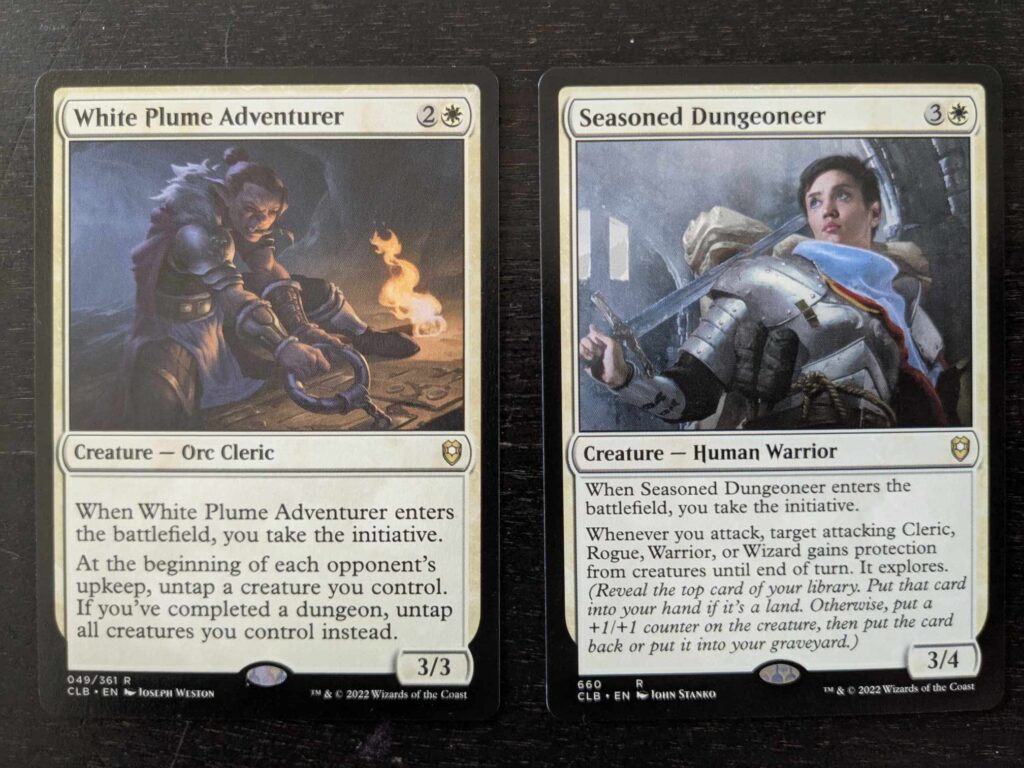
And then just a close up of the most insane Initiative creatures. These are almost playable even without introducing the Initiative. If you come across these in a draft, and there are no power in the pack, pick them up fast. They not only warp the game – they also very often win you the game.
No Responses