You know how it is often said that Magic resembles a game of rock-paper-scissors? You know the notion that there are three main archetypes of decks that overall beat each other: Combo beats aggro, aggro beats control and control beats combo.
Of course this is a very simplified way of looking at a very complex game with enormous metagame and deck design differences. And these days – in modern Magic – it may not make much sense, because the archetypes themselves have evolved a lot and new independent archetypes or combined archetypes like Tempo and Midrange have seen a huge boost in the years since Old School Magic. Aggro may look a bit like it did back in the day – the plan, at least, looks a lot like it did 20-25 years ago, even though the creatures you want to cast and turn sideways are indefinitely stronger than they were. Control has changed a lot, and I guess most control decks these days are probably more precisely what would be defined as midrange decks. Combo has changed immensely several times since Old School, and nowadays combo decks can be creature-based just as well as spell-based and, generally, there are a lot of interesting options in trying to outmaneuver your opponent and win through some kind of shenanigans.
But we are getting a bit out of line here. What I really wanted to write about was the original Magic Rock-Paper-Scissers game. Because I have been thinking a bit on/off about this the later years. Mainly when I have been playing combo in Old School.
Does it even apply to Old School Magic?
See, for some time, I convinced myself I had remembered it wrongly. It did not make a lot of sense to me based on my experience with playing Old School Magic. Why? Because I have found that I am often more on my heels against aggro(/burn) than I am against control, when I play one of my strange combo decks. Conversely, one of my often played against “The Deck”-players is often rather pressured when I start playing and forking restricted cards.
These experiences have been so counter-intuitive to me, that I have almost managed to ignore them and not prepare properly. I guess it is because the Rock-Paper-Scissors thinking is deeply engraved in my way of thinking about the game. But I think I am changing. At least I should be.
The reason why I found it interesting to write a couple of words about, is because Old School Magic is more or less the original way of playing the game (I know restrictions and other stuff has changed dramatically since the happy days of the early 1990’s). But maybe originality is not proof that paper beats rocks?
A strange format
I am not entirely sure when or where the way of looking at Magic as a simple Rock-Paper-Scissors game originates. And I wasn’t able to Google my way to a trustworthy source to tell me. But it is at least 15 years old, and probably much more.
But maybe not more than 30 years old? When Old School Magic was not Old School Magic, but simply “Magic” there was no real metagame. It was a time of firsts, and even though the central archetypes that we know and love today emerged quickly, I am not certain that it makes a lot of sense to apply the Rock-Paper-Scissors-theme to Old School Magic.
At least not knowing what we know today, about card advantage, mana advantage, card filtering, estimation of card quality and general optimization of decks. Nor what we enjoy today in the form of net-decking and the availability of cards (not talking about prices here, but simply the fact that no matter where you live in the world, you can – if you have the money – get whatever cards you need for your deck. That was certainly not the case in the pre-Internet years of Magic).
The point
Getting to it…
As mentioned above, I seem to lose more to dedicated aggro strategies and burn-kind decks than to hardcore control decks.
One of the most frightening things I can face in turn one is probably this:
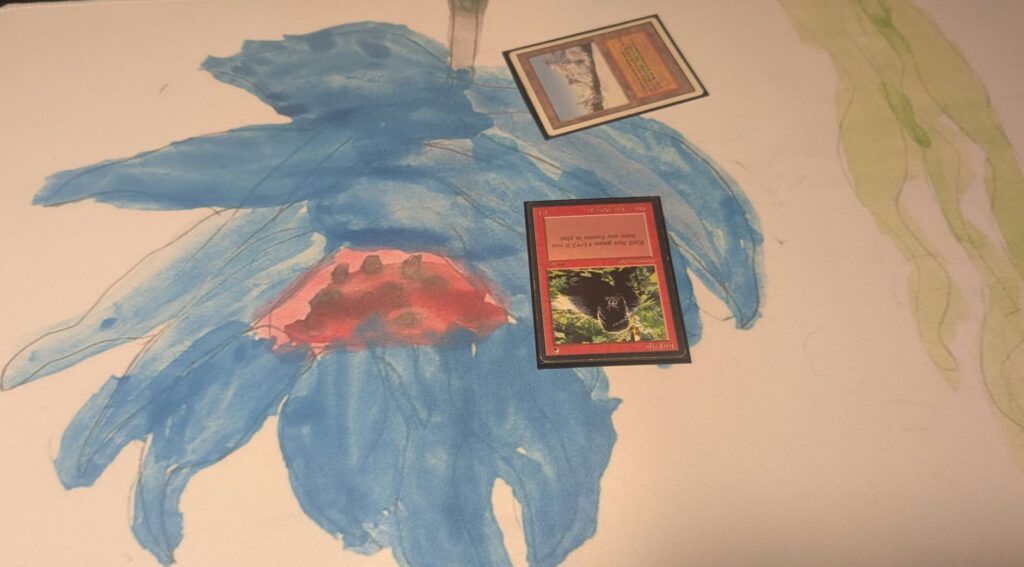
Resulting in a follow-up creature and then some Giant Growth-Berserk shenanigans. Or this:
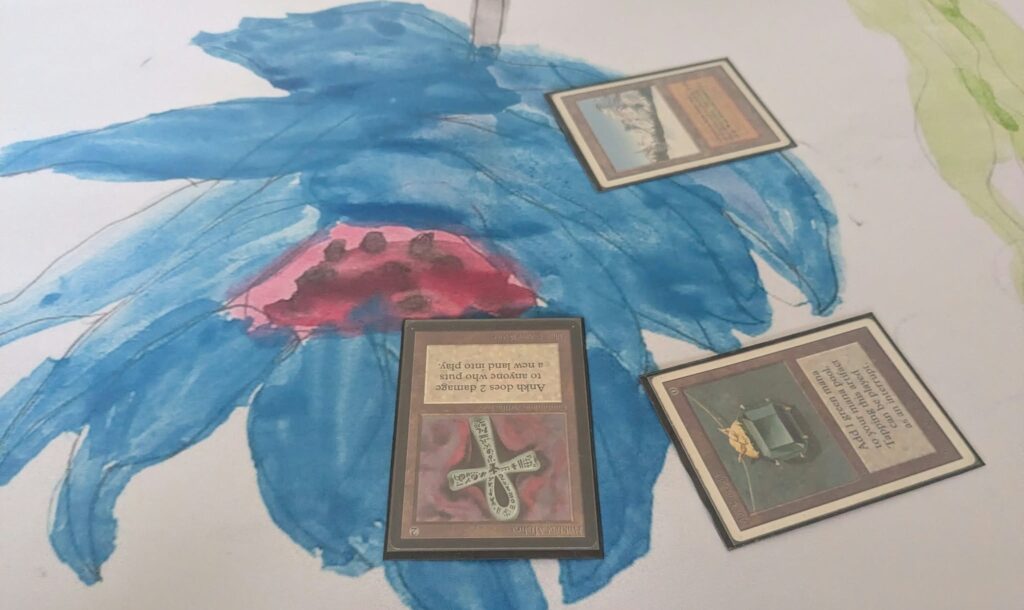
Followed up by more lock pieces and a grimly grinning little, purple guy ready to eat my soul…
Or, of course this:
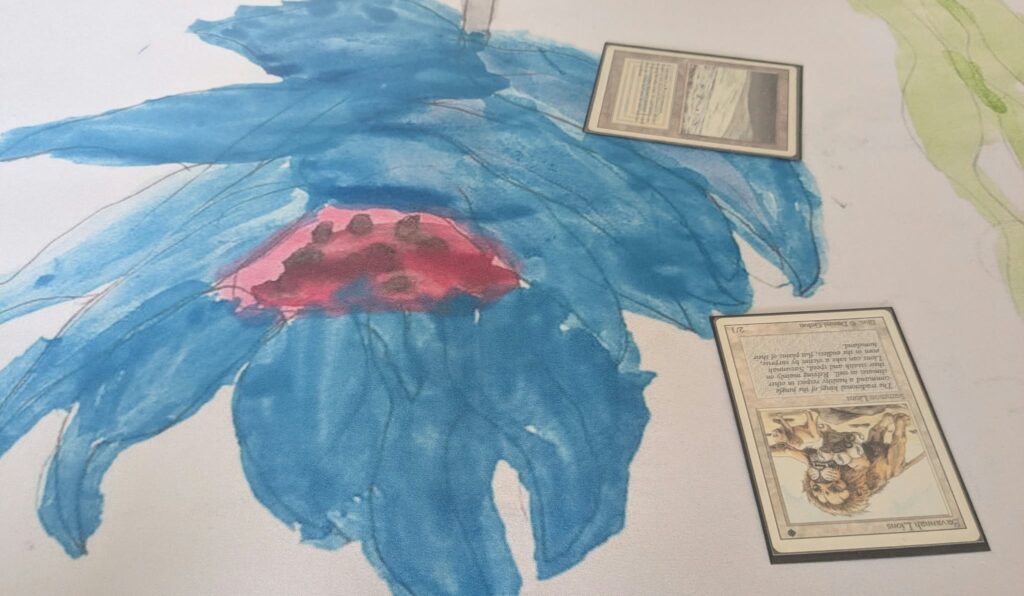
Followed up by burn, counters and Serendib Efreets (but lets face it, more or less everyone should fear this start in our format!).
When thinking about it, it makes sense. Because our format is strange. On MTGwiki they have a definition of archetypes. The write as follows:
“Aggro tends to beat control because it develops an advantage before control can find its relevant cards. Control tends to beat combo because it can disrupt the most important pieces of the card combo, leaving the combo player with weak cards. Combo tends to beat aggro because the combo player can finish their combo, killing the aggro player, while the aggro player is still fighting towards victory.”
I think the reason why I have found this description of the metagame and archetypes in Old School a bit lacking, is because control in Old School is also about killing creatures. And you often only have four or five counterspells in your deck. With little to no way of filtering all the unnecessary chaff away – and a really slow clock. You also often need UU to actually disrupt the combo player. Combo players play a lot of broken stuff. Especially if they know what they are doing, and play to their life totals as a resource. Five Counterspells are just often not enough (even though I admit that Disenchant and Red/Blue elemental blasts can also be very disruptive – it is basically never really easy to play combo in Old School).
But the point is that combo in Old School is slow. And it often needs a lot of mana (or a God draw). We conquer this slowness by throwing lifepoints at our opponents while building resources in the form of cards in hand and mana sources on the board. But aggro and burn in today’s Old School meta are really fast. They may not burn you for 20 in the first four rounds, but they will probably reduce you to 5-10 life in that span of turns. If you play combo, you have to be ready to either make sure to win before turn five – or do something to postpone the inevitable.
And of course the problem is, that you only have 60 spots in a deck, and you have to strike the perfect balance between your combo pieces and the disruption you field. It is no easy task in a format void of cards like Brainstorm and Duress.
I have found myself trying to postpone my aggro opponent, while still not watering down my own gameplan too much, in the latest combo decks I have been playing. It is not rocket surgery, but I simply never leave the house without four copies of Lightning Bolt in my deck. Bolt is such an insanely powerful and versatile card that can either burn the first Lion, Atog or Kird Ape or simply help in killing your opponent.
No Responses